



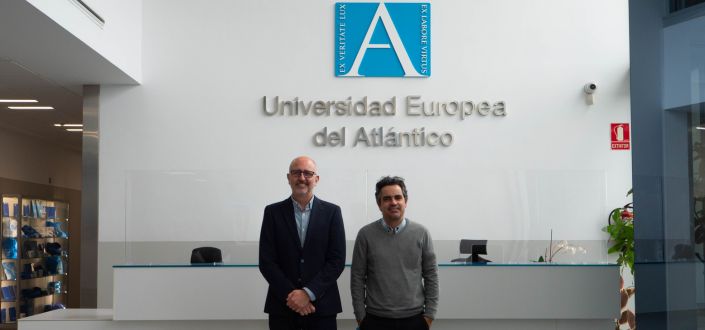
Dr. Juan Luis Martín Ayala, vice rector for research and knowledge transfer, and Dr. Angel Olider Rojas, researcher and professor at the Universidad Europea del Atlántico (European University of the Atlantic, UNEATLANTICO), worked with the Marqués de Valdecilla Research Institute (IDIVAL) on a neuropsychological study focused on analyzing cognitive control and prefrontal hemodynamic responses to emotional interference. The University of Burgos also participated in the study.
The study, titled “Emotional Interference and Right Prefrontal Hemodynamic Responses in Adult Cannabis Users: A Pilot fNIRS Study”, examines whether the prefrontal hemodynamic response to emotional interference is particularly sensitive to differences associated with brief periods of abstinence among different profiles of cannabis users. To do this, it measures brain activity using near-infrared functional spectroscopy (fNIRS).
Cognitive performance and hemodynamic response were analyzed in non-users, occasional users, and frequent or chronic users. Participants completed a battery of cognitive tests before and after the intervention, which included an emotional Stroop task. The analyses showed that the processing of emotional stimuli was more sensitive than non-emotional cognitive tasks in detecting changes after 72 hours of abstinence. In addition, the study detected specific changes in brain activity, as measured by the hemodynamic response in lateral prefrontal regions and the right hemisphere.
The behavioral effects were primarily concentrated in the emotional Stroop task. In it, occasional users showed a significant reduction in their response to negative stimuli following abstinence, while the control group exhibited learning through repetition, and chronic users showed no changes. At the same time, fNIRS analyses revealed significant variations in prefrontal oxygenation, confirming that emotional tasks offer greater sensitivity in identifying variations associated with short-term withdrawal depending on the pattern of use.
This research, published in the journal Frontiers in Psychology, reflects UNEATLANTICO’s commitment and its faculty to the production of scientific knowledge applied to neuropsychology and mental health, as well as its collaboration with other leading institutions such as IDIVAL and the University of Burgos.
The full article is available at the following link:
https://www.frontiersin.org/journals/psychology/articles/10.3389/fpsyg.2026.1873912/full