


A team of faculty and researchers from the Universidad Europea del Atlántico (European University of the Atlantic, UNEATLANTICO) designed and validated a psychological assessment tool that is groundbreaking in the scientific field. The study introduces a semi-implicit methodology that makes it possible to measure social perceptions on immigration while avoiding social desirability bias—that is, the tendency to give answers considered socially acceptable, which is characteristic of traditional questionnaires.
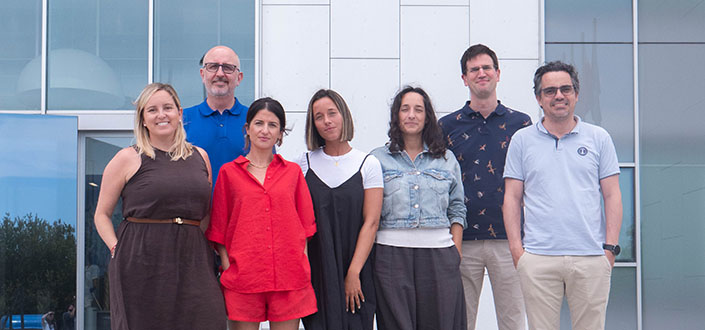
The research was conducted by a multidisciplinary team composed of various faculty members from the Universidad Europea del Atlántico. Representing the Degree in Psychology were David Herrero, Carla Álvarez, Ángel O. Rojas, Esther Setién, Isabel Diego, Sara Morales, and Juan Luis Martín. Representing the degrees in Communication were, Helena Garay, program director, and Ana Visiers.
The study was conducted with 616 participants, divided into two independent subsamples, and is based on an analysis of newspaper headlines that were either favorable or opposed to immigration. Using the Semi-Implicit Scale for Rating Attitudes Toward Immigration (SISRATI) test, participants assessed the accuracy of various news stories. This made it possible to identify their underlying attitudes without asking direct questions about their opinions.
During the methodological process, the team analyzed the psychometric properties of the scale using exploratory and confirmatory factor analysis, identifying a dual structure composed of 12 main items. Based on these results, the researchers classified the participants into four distinct attitudinal profiles: those in favor of immigration, those opposed to it, non-discriminatory believers, and non-discriminatory non-believers. The data revealed differences in emotional responses (in terms of valence and intensity), as well as in the personality traits of the “Big Five” model and in reflective style among the different groups.
The study’s findings highlight that the implicit methodology is effective because it captures complex attitudinal nuances regarding socially sensitive issues. Therefore, the tool provides a precise framework for future research on coexistence and social integration. In addition, the study makes it possible to identify and measure the gap between the public’s explicit statements and their implicit biases.
This research, recently published in the International Journal of Intercultural Relations, is an example of the Universidad Europea del Atlántico’s commitment to advancing research and transferring scientific knowledge to society. You can read the full article at this link.