



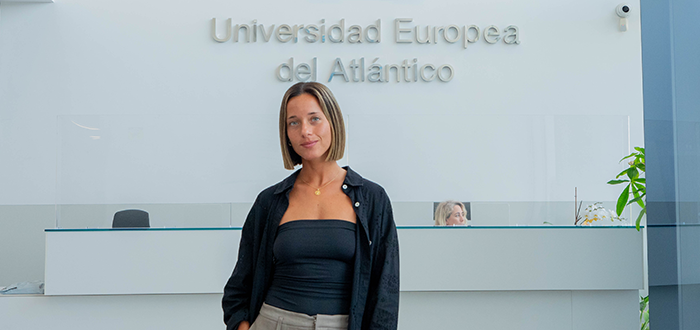
Sara Morales, a professor and researcher at the Universidad Europea del Atlántico (European University of the Atlantic, UNEATLANTICO), has completed the research project “Brain Correlates and Neurophysiological Measures Related to Emotional Intelligence in University Students,” funded by the Sociedad para el Desarrollo Regional de Cantabria (Association for the Regional Development of Cantabria, SODERCAN). This project has made it possible to establish a link between emotional intelligence, academic performance, and psychological well-being, integrating psychological assessment with the analysis of various neurophysiological indicators.
This project, led by the Centro de Investigación y Tecnología Industrial de Cantabria (Center for Research and Industrial Technology of Cantabria, CITICAN), and supported by UNEATLANTICO, was launched with the goal of assessing the relationship between emotional intelligence and neurophysiological measures, as well as their impact on academic performance and levels of depression, anxiety, and stress among university students.
The study involved 58 university students from various degree programs and combined psychometric tests of emotional intelligence with physiological measurements such as heart rate, respiratory rate, and skin electrical conductance using BIOPAC technology. This multidisciplinary approach has provided a more comprehensive understanding of the emotional and cognitive processes involved in learning and decision-making.
Among the main findings, the study shows that different emotional stimuli elicit distinct responses at both the behavioral and physiological levels. Positive emotions, such as happiness, led to faster information processing, while other emotions required greater cognitive engagement. Regarding psychological outcomes, it was observed that students with higher levels of emotional intelligence exhibited greater impulse control and better behavioral inhibition.
As part of the project, an emotional intelligence intervention program was also designed and implemented for university students. The 30-hour workshop addressed topics such as emotional management, anxiety, resilience, and socio-emotional skills, with the goal of strengthening students’ emotional competencies and promoting their psychological well-being.
The results obtained will help advance the development of standardized protocols for assessing emotional intelligence using neurophysiological indicators, thereby facilitating the design of more personalized interventions tailored to student needs.
In addition to its scientific contribution, this project advances scientific knowledge in the fields of neuropsychology and emotional education, positioning the Universidad Europea del Atlántico and CITICAN as leading institutions in the development of research areas related to R&D&I in mental health and university well-being.
The project also calls for the publication of several scientific articles in specialized journals, with the aim of disseminating the findings and continuing to advance research on the interaction between emotion, cognition, and learning.
The researcher emphasizes that “integrating neurophysiological measures into purely psychological aspects allows us to gain an innovative, objective perspective, since what I say I feel is not the same as what I actually feel, and this truly helps various institutions, in this case, the university, to become more emotionally intelligent and to recognize the value that emotional intelligence holds in the academic field, since it is relevant not only scientifically but also educationally and in practical applications.”
Overall, this research contributes to a better understanding of the factors that influence students’ academic success and well-being, strengthening a line of research focused on developing innovative strategies to promote a healthier higher education system that is better tailored to students’ emotional needs.